
Diamond Clarity: The Complete Guide to Understanding Diamond Inclusions, Grades, and Value

Diamond clarity is one of the most important factors when choosing an engagement ring or fine jewelry. It directly affects a diamond’s appearance, brilliance, and price. Understanding how diamond clarity is graded—and how much it really matters—helps buyers choose a beautiful, eye‑clean diamond without overpaying.
This guide explains what diamond clarity is, how it’s calculated, the GIA clarity chart, and the best clarity grades for engagement rings, so you can make a confident, informed decision.
What Is Diamond Clarity?
Diamond clarity measures the presence of natural imperfections inside or on the surface of a diamond. These characteristics form as the diamond develops deep within the Earth under extreme heat and pressure.
Clarity is evaluated based on the number, size, type, location, and visibility of these imperfections.
Diamond Inclusions (Internal Characteristics)
Diamond inclusions are internal features found within a diamond. Common types include:
- Crystals or mineral deposits
- Feathers (tiny internal fractures)
- Clouds (clusters of microscopic inclusions)
- Pinpoints
Central or dark inclusions usually affect a diamond’s appearance more than small, colorless inclusions near the edges.
Diamond Blemishes (Surface Characteristics)
Diamond blemishes are surface irregularities, such as:
- Scratches
- Chips
- Nicks
- Polishing marks
Blemishes generally have less impact on value than internal inclusions and are often removable through repolishing.
Diamond Clarity Grading System (GIA Clarity Chart)
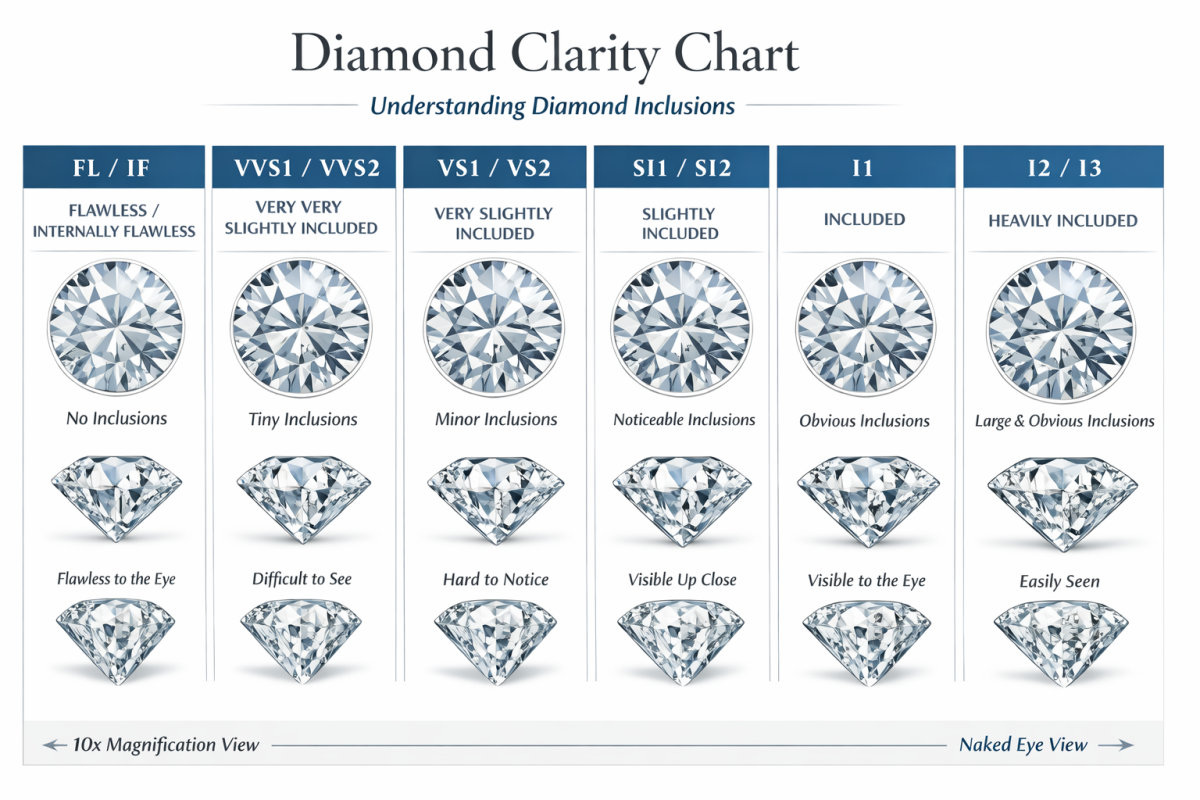
The most trusted clarity grading standard is established by the Gemological Institute of America (GIA). Diamonds are examined under 10× magnification and assigned one of the following grades:
| Clarity Grade | Abbreviation | Description |
|---|---|---|
| Flawless | FL | No inclusions or blemishes visible under 10× magnification |
| Internally Flawless | IF | No internal inclusions; only minor surface blemishes |
| Very Very Slightly Included | VVS1 / VVS2 | Extremely difficult to detect inclusions under 10× |
| Very Slightly Included | VS1 / VS2 | Minor inclusions, difficult to see under 10× |
| Slightly Included | SI1 / SI2 | Noticeable inclusions under 10×; usually eye‑clean |
| Included | I1 / I2 / I3 | Obvious inclusions visible to the naked eye |
Tip: VS and SI diamonds often provide the best balance of beauty and value.
How Diamond Clarity Is Calculated
Diamond clarity grading is not a simple count of imperfections. Professional gemologists evaluate clarity using a standardized process:
1. Magnification Inspection
Experts use a 10× jeweler’s loupe or microscope, the international grading standard, to identify inclusions and blemishes.
2. Evaluating Inclusions
Each inclusion is analyzed based on:
- Size – larger inclusions are more impactful
- Number – multiple inclusions lower clarity
- Location – center inclusions are more visible
- Type & Color – dark or reflective inclusions are more noticeable
3. Surface Blemishes
Surface flaws are assessed but usually carry less weight than internal inclusions unless they affect durability.
4. Overall Visual Impact
The final clarity grade reflects how inclusions affect brilliance, transparency, and naked‑eye appearance, not just technical presence.
Best Diamond Clarity for Engagement Rings
For most buyers, the goal is an eye‑clean diamond—one with inclusions that are not visible without magnification.
Recommended Clarity Grades
- VS1–VS2: Excellent clarity with no visible imperfections
- SI1: Often eye‑clean and significantly more affordable
- SI2: Can be eye‑clean in smaller or well‑cut diamonds
Choosing VS or SI diamonds can save 20–50% compared to flawless grades with no visible difference to the naked eye.
Diamond Clarity vs Cut: What Matters More?
While clarity is important, diamond cut has the greatest influence on sparkle. A well‑cut diamond can mask small inclusions, while a poorly cut flawless diamond may appear dull.
Priority order for beauty:
- Cut
- Color
- Clarity
- Carat weight
Tips for Buying the Right Diamond Clarity
- Always request a GIA or IGI certification
- View diamonds in natural lighting when possible
- Choose inclusions near the edges, which can be hidden by prongs
- Focus on eye‑clean appearance rather than perfection on paper
Diamond Clarity FAQs
Can you see inclusions in an SI1 diamond?
Most SI1 diamonds are eye‑clean, especially when inclusions are small or located away from the center.
Do flawless diamonds sparkle more?
Sparkle depends primarily on cut quality. A well‑cut SI diamond can appear just as brilliant as a flawless diamond.
How much does clarity affect diamond price?
Higher clarity grades like FL or VVS can cost 20–50% more than VS or SI diamonds of the same cut, color, and carat.
Is diamond clarity more important than color?
In most cases, color has a greater visual impact than clarity. Minor inclusions rarely affect appearance.