
Does the Way a Ring Is Set Affect a Diamond’s Sparkle?

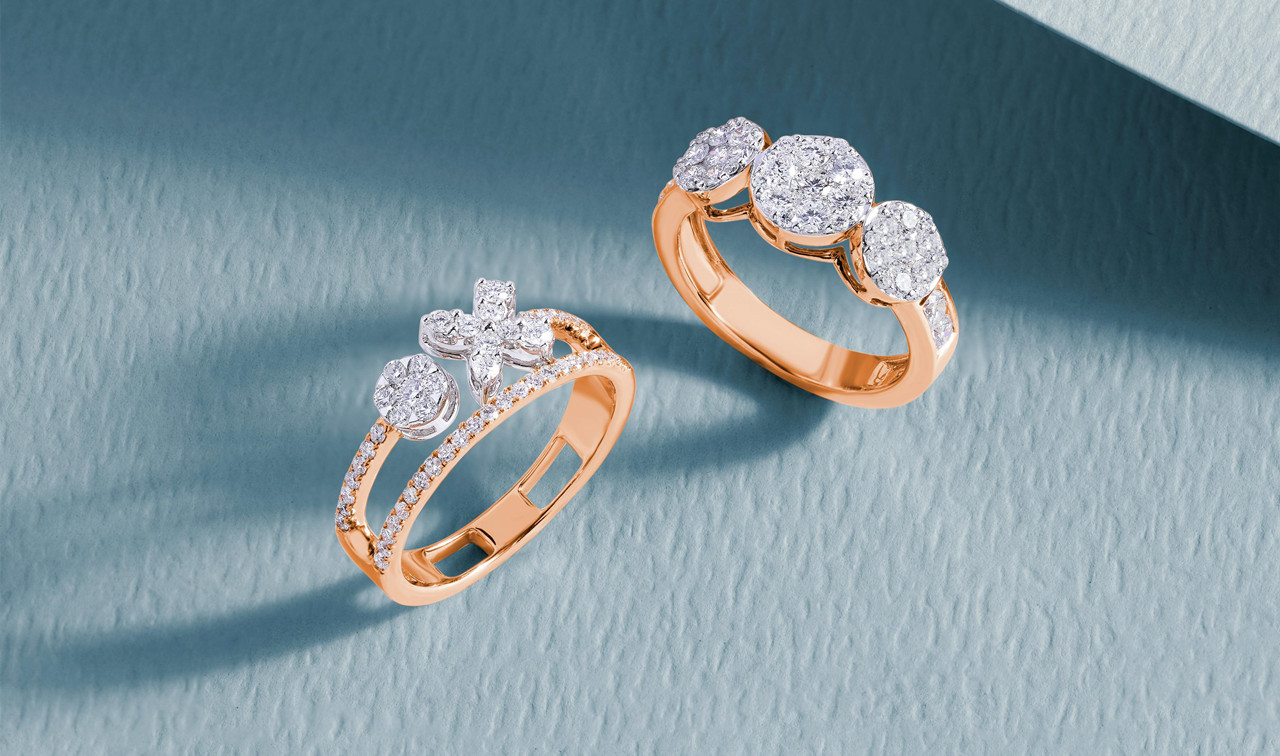
When people choose a diamond ring, most of the attention goes to the diamond itself—carat weight, color, clarity, cut. On paper, these numbers seem to tell the whole story. Yet in real life, two diamonds with very similar specifications can look surprisingly different once they’re set into rings.
More often than not, the reason has little to do with the diamond and everything to do with how it’s set.
From both a jewelry-making and optical perspective, the setting plays a quiet but crucial role in how a diamond handles light—and ultimately, how much it sparkles.
What Do We Really Mean When We Say a Diamond “Sparkles”?
In gemology, sparkle isn’t a single quality. It’s a combination of three visual effects working together:
- Brightness – how strongly the diamond reflects white light
- Fire – the flashes of color created when light disperses inside the stone
- Scintillation – the pattern of light and dark as the diamond moves
Cut quality lays the foundation for all of this, but the setting determines how easily light can enter the stone and how freely it can bounce back out.
Why the Setting Makes Such a Difference
Simply put, even a well-cut diamond needs room to work with light.
Light entry matters
A diamond doesn’t take in light only through the top. Light also enters through the sides and, importantly, the bottom. When a setting blocks these areas—especially around the girdle or pavilion—the amount of light reaching the interior of the diamond is reduced. Less light in means less light out.
That’s often why a diamond can look dull despite decent specs.
Metal coverage affects fire
Fire depends on light traveling through the diamond at just the right angles. Heavy metal coverage, thick prongs, or full enclosures can shorten those internal light paths. The result is a sparkle that feels flatter, with fewer flashes of color.
Height changes perception
How high a diamond sits above the band also influences how it looks. A slightly elevated setting allows light to interact with the stone from more directions, often giving it a livelier, more dimensional appearance. Lower settings may feel sleeker and more secure, but they can mute the diamond’s visual impact.
How Common Setting Styles Compare
Prong settings
Prong settings remain popular for a reason. By holding the diamond with minimal metal, they leave most of the stone exposed to light. This usually results in strong brightness and noticeable fire. Diamonds set this way also tend to appear larger than their actual carat weight.
For anyone who wants the diamond itself to take center stage, prongs are hard to beat.
Bezel settings
In a bezel setting, metal wraps fully around the diamond’s edge. It’s one of the most secure and practical choices, especially for everyday wear. The trade-off is that side light is more restricted, so the sparkle tends to be softer and more controlled rather than bold.
Some people prefer this calmer, more modern look—and that’s part of its appeal.
Channel settings
Channel settings are most often used for rows of smaller diamonds. Each stone is held between two metal walls, creating a clean, continuous line of sparkle. Individual diamonds may not show much fire on their own, but together they create a strong overall shimmer.
Pavé settings
Pavé settings rely on many small diamonds set closely together. When well executed, they produce an almost glittering surface of light. The sparkle here comes from collective effect rather than the performance of any single stone, which makes craftsmanship especially important.
Tension settings
Tension settings use the pressure of the metal band itself to hold the diamond in place. With very little metal touching the stone, light can reach it from nearly every angle. The look is striking and modern, but it demands precise engineering and high-quality materials.
Matching the Setting to the Diamond
In practice, the setting often acts as a visual amplifier—or a filter—for the diamond’s qualities.
A well-cut diamond benefits most from open settings. Smaller stones can appear more substantial when set higher. Diamonds with slightly lower color grades may look brighter when light exposure is maximized. Stones with minor inclusions can sometimes be flattered by settings that offer subtle coverage.
A good setting doesn’t compete with the diamond. It quietly helps the stone show its best side.
Frequently Asked Questions
Does a setting really make a visible difference, or is it subtle?
In most cases, the difference is noticeable—especially in everyday lighting. Two diamonds with similar grading reports can look quite different once set, simply because one allows more light to enter and move freely. It’s often more obvious than people expect.
Is a more open setting always better for sparkle?
Not always. Open settings usually enhance brightness and fire, but they’re not ideal for every lifestyle. If you wear your ring daily and work with your hands, a more protective setting may be a better long-term choice, even if the sparkle is slightly more restrained.
Can a setting make a diamond look bigger?
Yes. Settings that lift the diamond higher or expose more of its surface often make the stone appear larger than its actual carat weight. This is why the same diamond can feel very different depending on how it’s mounted.
Do bezel or low-profile settings make diamonds look dull?
They don’t necessarily make diamonds dull—just different. Bezel and low-profile settings tend to create a softer, more understated glow rather than sharp flashes. Some people prefer this look because it feels refined and modern.
If I already have a diamond, can changing the setting improve its appearance?
Absolutely. Resetting a diamond can dramatically change how it looks without changing the stone itself. Many people are surprised by how much more lively their diamond appears after switching to a more light-friendly setting.
Which matters more: the diamond or the setting?
They matter together. A great diamond can lose impact in a poorly chosen setting, and a well-designed setting can elevate a modest stone. The best results come when both are considered as part of the same design decision.